From the watchtower, patterns rarely appear all at once.
They begin as small signals—new technologies, new engineering challenges, new ways of building systems. Over time, those signals begin to align. In a previous Watchtower post, we explored how photonics is pushing the semiconductor industry to rethink traditional approaches to yield analytics. Optical systems introduce new variables—packaging alignment, electro-optical testing, and cross-domain interactions—that challenge yield models built primarily around wafer fabrication and electrical test. At first glance, this may seem like a niche issue. But from the watchtower, something else becomes visible. Photonics is not the exception. It is the preview.
The Architecture of AI Systems Is Changing
For decades, semiconductor design followed a familiar pattern. A single monolithic die contained most of the system logic, and manufacturing complexity resided primarily in wafer fabrication. Yield analytics evolved accordingly. Most yield learning revolved around:
- process variation
- defect density
- electrical test results
- packaging reliability
But the architecture of modern AI systems is changing rapidly. Large compute platforms are increasingly built using:
- chiplet architectures
- heterogeneous integration
- advanced packaging technologies
- high-bandwidth interconnect fabrics
- optical communication links
As systems grow more complex, performance and manufacturability increasingly depend on how these components interact. Yield is becoming less about the behavior of a single device—and more about the behavior of an entire system.
The Rise of Chiplet Architectures
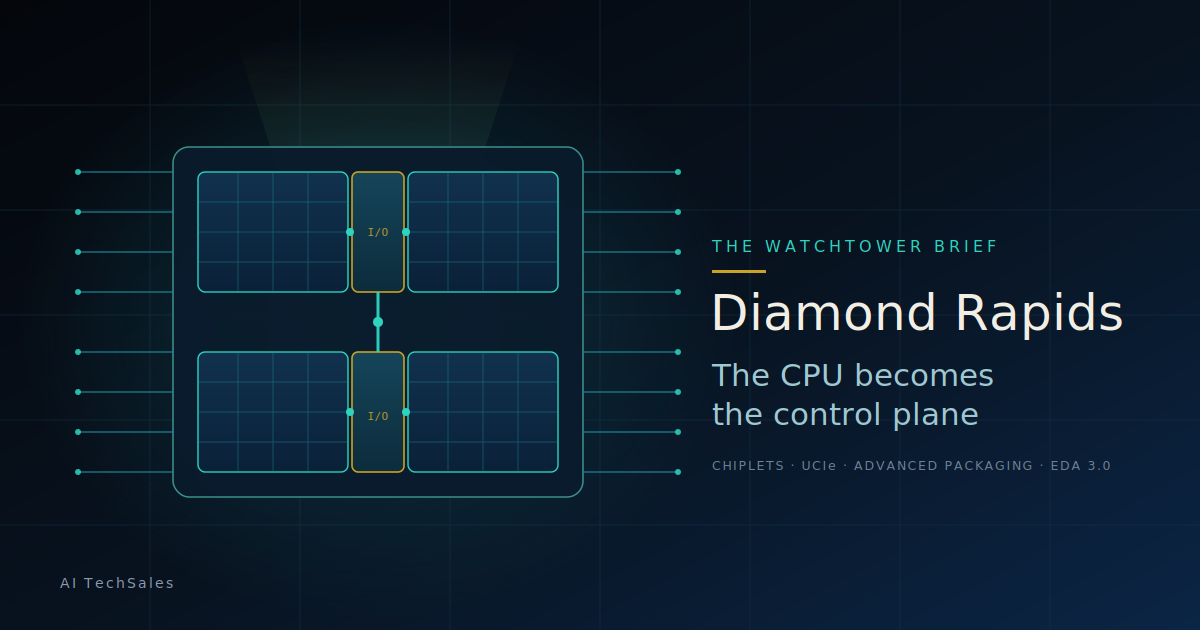
Chiplets represent one of the most important shifts in semiconductor design. Rather than building a single, extremely large die, engineers assemble systems from multiple specialized dies connected through high-bandwidth interfaces. This approach provides clear advantages:
- improved manufacturing efficiency
- modular design reuse
- process node flexibility
- faster design iteration
But it also changes how yield must be understood. In chiplet systems, yield is no longer determined solely by the yield of individual dies. It also depends on:
- interconnect integrity
- packaging precision
- signal integrity across die boundaries
- thermal interactions between components
What once appeared to be a device-level issue is increasingly becoming a system-level learning problem.
Co-Packaged Optics Extends the Pattern
At the same time, another architectural shift is underway. As AI clusters scale to unprecedented sizes, traditional electrical interconnects struggle to keep pace with bandwidth and power demands. This has accelerated interest in co-packaged optics (CPO). In these architectures, optical components are integrated directly alongside compute silicon within the package itself. This approach promises dramatic improvements in:
- bandwidth density
- power efficiency
- communication latency
But it also introduces new layers of engineering interaction. Optical devices now share the same package as high-power compute silicon. Thermal behavior becomes more complex. Alignment tolerances tighten. Testing must combine both electrical and optical measurements. Once again, yield behavior emerges from the interaction of multiple technologies operating together.
Yield Intelligence Becomes a System Capability
The semiconductor industry has developed extraordinary tools for designing and verifying silicon. But as systems become more integrated and heterogeneous, understanding yield behavior requires a broader perspective. Instead of analyzing isolated datasets, engineering teams increasingly need to correlate information across the full lifecycle of a device: Design, Manufacturing, Test, Packaging, and System behavior. This shift transforms yield analytics from a reporting function into something more powerful.
Yield intelligence.
It enables engineering teams to understand how design decisions influence manufacturing outcomes, how packaging variation affects system performance, and how insights from production can inform future designs. Organizations that build this capability gain something invaluable: The ability to learn from silicon faster.
A Natural Evolution
From the watchtower, the direction of travel is becoming clear. Photonics revealed the limits of traditional yield analytics. AI infrastructure is extending that lesson across the entire semiconductor ecosystem. Chiplets, heterogeneous integration, and co-packaged optics are not isolated innovations. They are part of a broader transformation in how semiconductor systems are built. As complexity grows, the industry will increasingly rely on platforms capable of connecting engineering insight across the full lifecycle—from design to manufacturing to system operation. This is not a disruption. It is a natural evolution. And the organizations that embrace it will be best positioned to shape the next era of semiconductor innovation.
From the Watchtower
From the watchtower, the most important changes are rarely the loudest ones. They are the quiet shifts in how engineers understand the systems they build. Photonics offered an early glimpse of that shift. AI infrastructure is making it impossible to ignore. The future of semiconductor engineering will not depend solely on how we design chips. It will depend on how effectively we learn from them. And that learning increasingly depends on connecting the data, insights, and engineering decisions that shape the entire semiconductor lifecycle.