ICTK
PUF
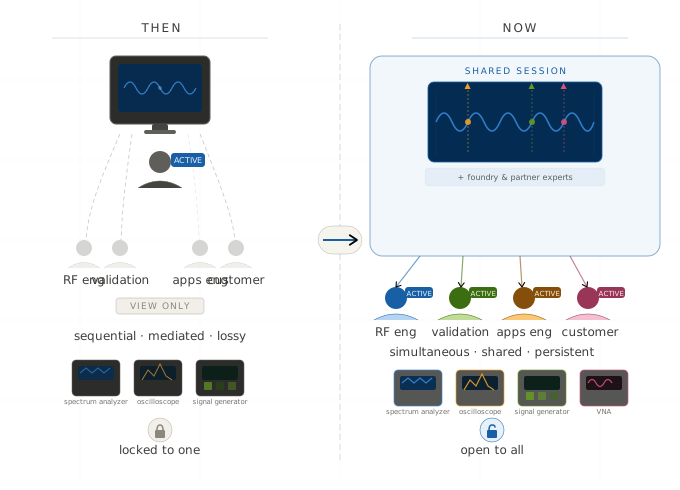

For decades, the RF lab has operated on a simple assumption: One engineer. One workstation. One set of instruments. That model worked when teams were co-located, and problems were contained. It no longer reflects how engineering actually happens.
Most RF labs today are still built around a single-user architecture:
Even with remote access enabled, the model remains the same. It simply moves the single user from the lab to a different location.
The moment multiple people need to engage simultaneously, friction appears.
What should be a shared investigation becomes a mediated experience.
Today’s RF debug workflows rarely involve just one person. They often include:
These participants need to:
The lab, however, still assumes only one of them is “active.”
Traditional lab tools prioritize control:
But modern workflows require something different: Shared visibility. The ability for multiple people to:
simultaneously.
A new model is emerging. Instead of a single user interacting with a lab, teams participate in sessions. In this model:
This is how software development evolved. It is now beginning to happen in hardware.
The important shift is not technical — it is conceptual. The lab is no longer a tool used by an individual. It is becoming a shared environment among the team.
As engineering becomes more distributed and time-sensitive, the single-engineer lab will continue to break down. Not because it is flawed. But it was designed for a different era. The replacement will not be a better remote desktop. It will be a fundamentally different model of interaction.
Read the entire blog series and learn more about Quaxys here