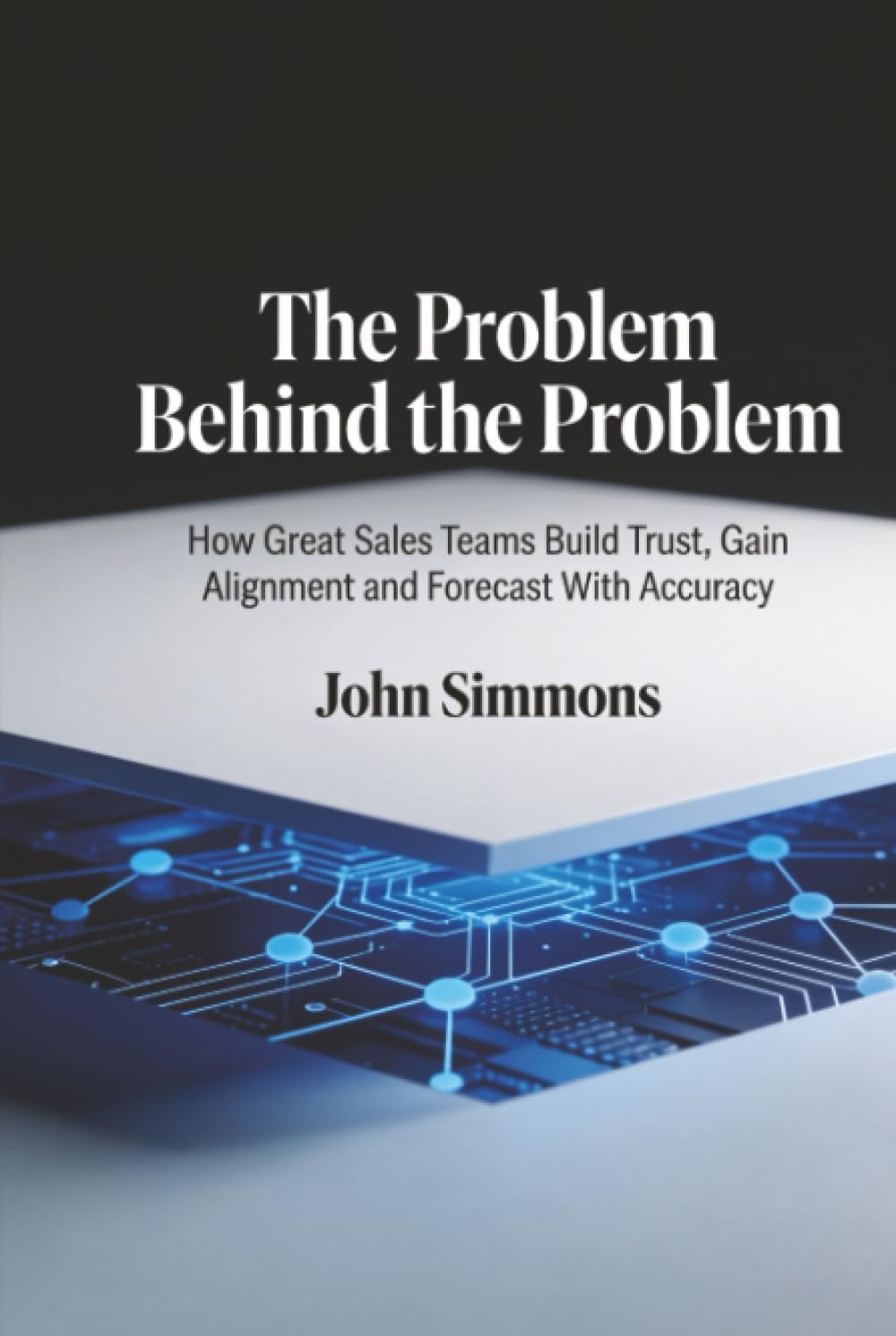
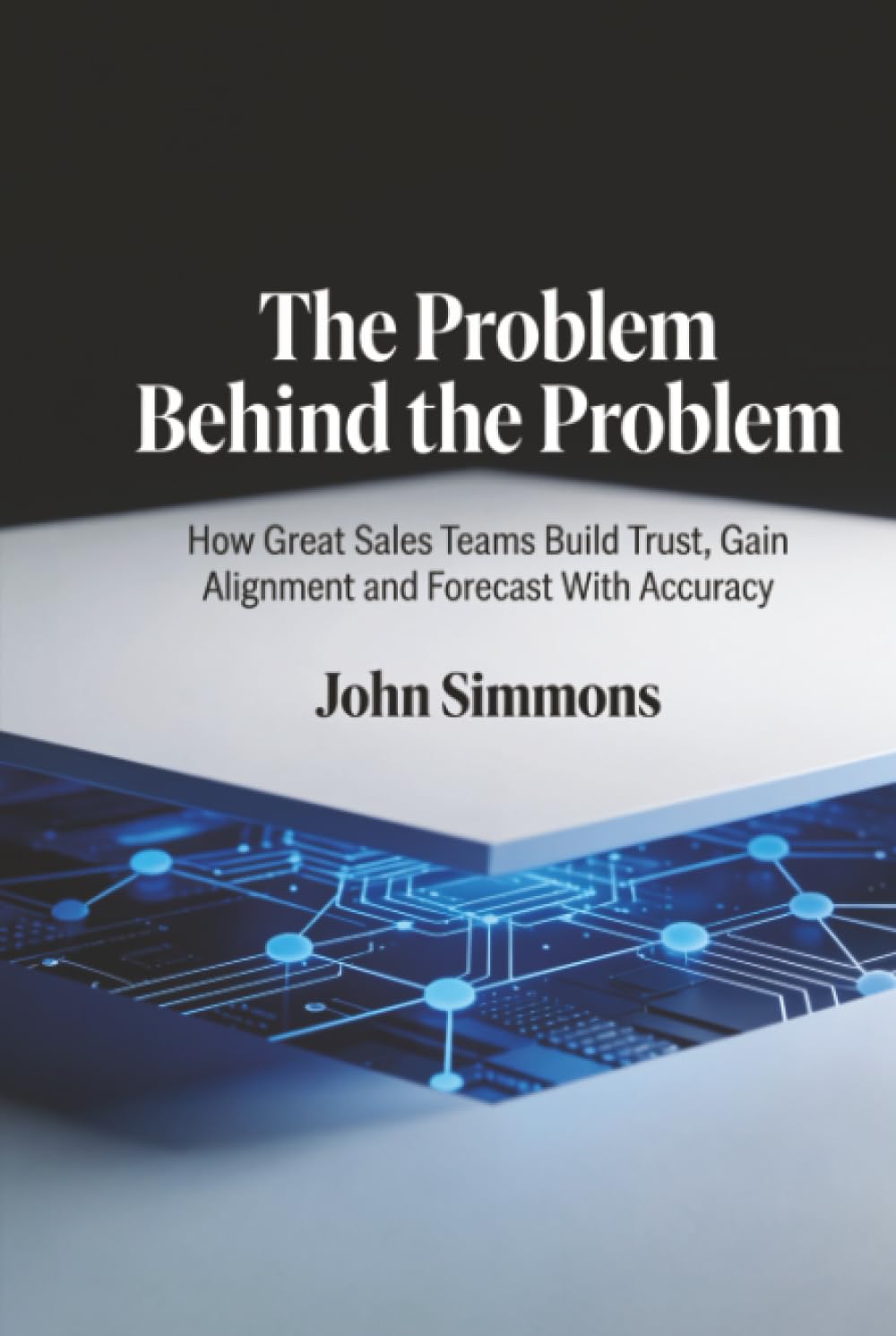
The Problem Behind the Problem
How great sales teams build trust, gain alignment, and forecast with accuracy.
Every stalled deal traces back to the same mistake: the seller solved the problem the buyer said out loud, not the one actually driving the decision. The PBP Method is John Simmons’ diagnostic framework for finding that real, organizational root cause, and it is the same method AiT runs, automatically, on every deal in its own pipeline.
What is the Problem Behind the Problem (PBP) method?
PBP is a structured diagnostic framework for sales and advisory conversations. It is built on a simple, uncomfortable observation: the thing a buyer says out loud is almost never the thing that actually decides whether they buy. Every deal carries three layers, and the deals that stall are the ones where the seller never gets past the first.
Surface problem
What the buyer says out loud: a tactical complaint like a slow tool or a missing report.
Business problem
The measurable consequence underneath it: lost revenue, wasted headcount, a competitive exposure the CFO actually tracks.
The problem behind the problem
The organizational, process, or political root cause: misaligned incentives, unclear ownership, a mandate no one really believes in. This is the layer where deals are actually won or lost.
RDEQA: the five-phase method behind the book
The book puts PBP to work through RDEQA: five phases, each with its own exit criteria. A deal cannot legitimately advance to the next phase until the current one is satisfied, which is exactly where most forecasts quietly go wrong.
Reveal
Surface the real driver beneath the stated need, in the customer’s own words.
Diagnose
Map who it affects, where it lives, and what it costs.
Expand
Align multiple stakeholders and connect it to a compelling event.
Qualify
Confirm criteria, process, timeline, and the economic buyer.
Advance
Resolve objections, agree commercials, and mutually plan the close.
Written for anyone who owns a number
Account executives who are tired of forecasts that don’t hold up in the room.
Sales managers running deal reviews, coaching, and pipeline calls.
RevOps and sales-enablement leaders building one shared language across a team.
Founders and GTM leaders standing up a sales motion for the first time.
Sixteen chapters, from first pitch to running the system
The book moves from the myths that hold individual sellers back to the coaching systems that let entire teams execute the method consistently, closing with a chapter on turning AI into deal intelligence and one on running PBP as an organizational advantage, not just a personal skill.
- The Day I Wrote “Go Into Sales”
- The Myth of the Natural Salesperson
- Professional Selling Is a Team Sport
- The Question Behind the Question
- Why Curiosity Beats Pitching
- Discovery That Matters
- Turning Skeptics into Advocates
- Winning the Executive Conversation
- Delivering Insight Before Discovery
- Understanding the Gap
- The Trust Equation
- Negotiation: Protecting and Establishing Value
- Deal Reviews & Coaching
- Coaching the System
- AI in the Sales Process
- Running the System
Plus two appendices: a Deal Review Scorecard, and a library of AI-assisted deal review prompts.
How we run deals at AiT
PBP isn’t a framework we teach once and shelve. It’s the operating discipline behind every account across our portfolio. Every active opportunity is scored against the RDEQA rubric (five phases, zero to eight points each) and gated by three checks (an unresolved skeptic, live competition, and a forecast timeline that hasn’t actually been tested) that cap a deal’s rating regardless of its raw score. The result rolls up into one honest call: Commit, Best Case, Pipeline, or At Risk.
The diagnosis runs without anyone asking for it. The moment a rep logs a meeting note in HubSpot, an AI-assisted PBP engine reads it, separates what the buyer said from what it’s costing them and from the deeper organizational cause driving the decision, and writes a structured summary straight back onto the deal. No extra step, no separate report to fill out.
Those fields live natively on the deal card, next to amount and stage, so a manager can see which deals are genuinely qualified before a forecast call, not after one misses.

John Simmons
John Simmons is CEO and Co-Founder of AiT, where he leads a team representing a portfolio of specialized semiconductor design companies. An enterprise sales leader with three decades of experience closing complex, high-value deals, John built the PBP Method out of the question he kept asking in his own deal reviews: what is actually stalling this, underneath what everyone is saying out loud? He is also co-author, with Simon Bennett, of The Connector’s Playbook.
Common questions
What is the Problem Behind the Problem (PBP) method?
A structured diagnostic framework that moves a sales or advisory conversation past the symptom a buyer states out loud to the organizational root cause actually driving their decision, separating every deal into a surface problem, a business problem, and the PBP itself.
What is the RDEQA framework?
The five-phase method that puts PBP to work: Reveal, Diagnose, Expand, Qualify, and Advance, each with its own exit criteria, so a deal can’t skip ahead without real progress.
How does AiT use PBP internally?
Every opportunity is scored against RDEQA and rolled into a Commit, Best Case, Pipeline, or At Risk forecast call. The scoring is automated: an AI-assisted engine reads meeting notes and updates the deal record directly, with no manual step for the rep.
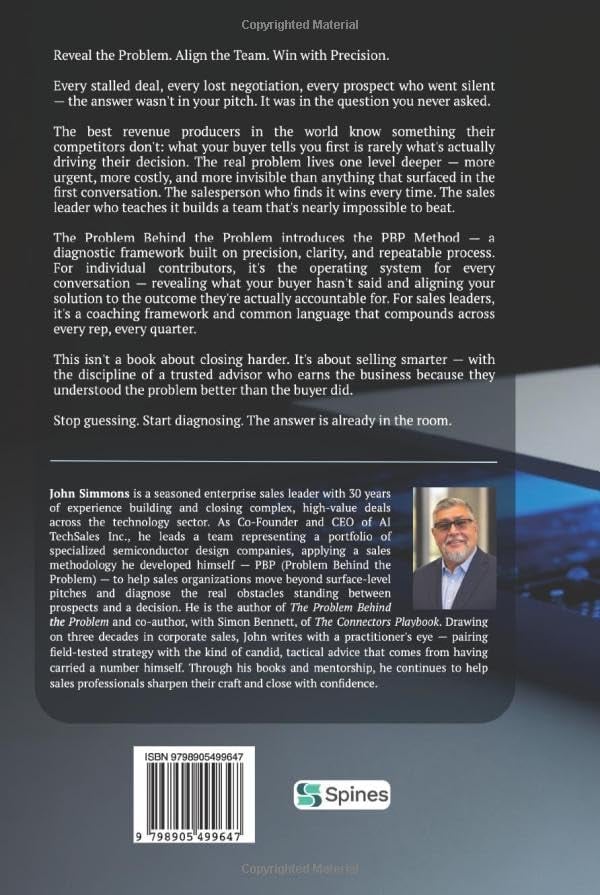
Reveal the problem. Align the team. Win with precision.
Available now in paperback and on Kindle.
ISBN 979-8-9054996-4-7
Want to see PBP running in your own pipeline?
If you want to talk through how the PBP Method and RDEQA scoring could run in your own sales process, John is the person to talk to.